
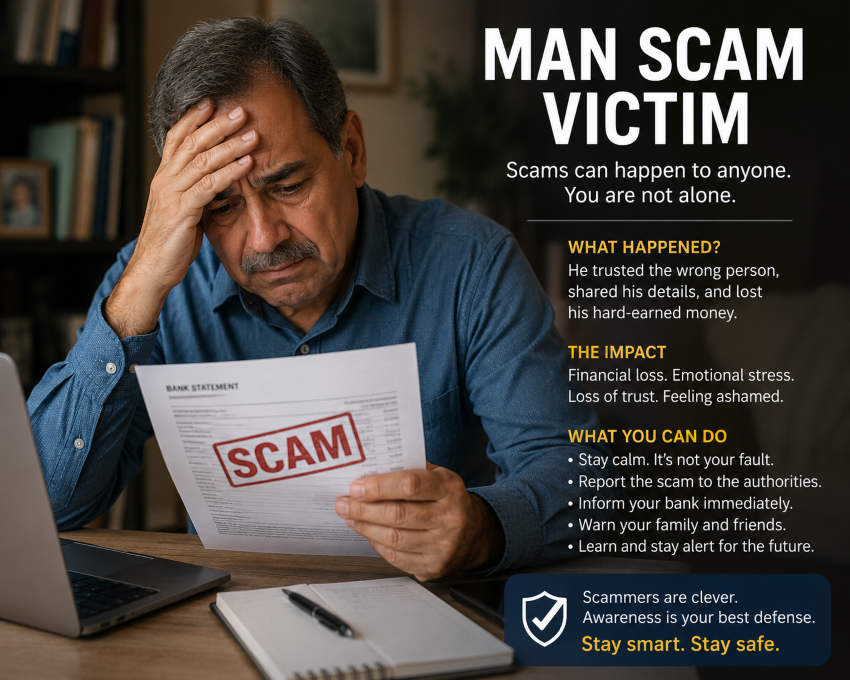
Scams are constantly changing. The basic goal, however, remains the same: to trick you into giving away your money, personal information, account access or trust.
Today’s scammers are becoming better at making their messages, phone calls and websites look genuine. They may pretend to be a bank, government agency, delivery company, employer, friend or even a family member.
Artificial intelligence is also making some scams more convincing. But there is good news: you do not need to be a technology expert to protect yourself. A few simple habits can prevent many scams.
Here are some of the scams you should know about today.
1. Impersonation Scams
Impersonation scams remain one of the most common types of fraud. The scammer pretends to be someone you trust, such as a government official, bank employee, police officer, company representative or even a family member.
The FTC reported more than one million reports of impersonation scams in 2025, with reported losses of about $3.5 billion.
How it works
You may receive a phone call, text message, email or social-media message.
The person may tell you that:
- Your bank account has a problem.
- Your identity has been stolen.
- You owe money.
- Your computer has been compromised.
- You are under investigation.
- A family member needs urgent help.
The scammer then asks you to send money, provide account information or move your money to a supposedly “safe” account.
Warning signs
Be suspicious if someone:
- Creates fear or urgency.
- Demands immediate payment.
- Asks for passwords or verification codes.
- Tells you to move money to protect it.
- Insists that you keep the matter secret.
- Tells you not to contact your bank or family.
How to protect yourself
Stop and verify the person’s identity independently.
If someone claims to be from your bank, government agency or another organization, contact that organization using a phone number or website you already know is genuine.
Do not use the telephone number or link provided by the unexpected caller or message.
2. AI Voice and Family Emergency Scams
Artificial intelligence can make scams more convincing. A criminal may use a short recording of someone’s voice to create a convincing imitation.
How it works
You receive a call that appears to be from your child, grandchild, relative or friend.
The caller says there has been an emergency and urgently needs money.
The voice may sound exactly like someone you know.
Warning signs
The biggest warning sign is pressure to act immediately.
Be particularly careful when the caller says:
- “Don’t tell anyone.”
- “I need the money right now.”
- “I can’t talk for long.”
- “Please send it immediately.”
How to protect yourself
Do not rely on the voice alone.
Call the person back using a number already stored in your phone. You can also ask a personal question that a stranger or voice-cloning system may not know.
Consider having a simple family verification phrase for genuine emergencies.
3. Fake Job and Task Scams
Fake employment scams have become increasingly common, particularly through unexpected text messages and online platforms.
The FTC has warned about “task scams,” in which victims are offered easy online work such as rating products or completing simple tasks. The supposed earnings are fake, and victims may eventually be asked to deposit their own money.
How it works
You receive a message offering an attractive work-from-home opportunity.
You may be promised money for liking videos, rating products or completing online tasks.
Initially, the website or app may even show earnings accumulating in your account.
Eventually, you are told to pay money to unlock more tasks or withdraw your earnings.
Warning signs
Be cautious if:
- You receive an unexpected job offer.
- The pay seems unusually high for very little work.
- You are asked to pay to get paid.
- You must deposit cryptocurrency or other money.
- There is no proper interview or employment process.
How to protect yourself
Never pay money to obtain a job or to receive supposed wages.
Research the company independently. Do not rely only on information supplied by the recruiter.
4. Investment and Cryptocurrency Scams
Investment scams can cause extremely large financial losses. The FBI reported that investment fraud remained the largest source of reported scam losses in its 2025 data, accounting for nearly half of reported scam-related losses.
How it works
A scammer may contact you through social media, messaging apps, dating platforms or an online advertisement.
You may be promised:
- Guaranteed profits.
- Very high returns.
- A special investment opportunity.
- Exclusive cryptocurrency advice.
- A secret trading system.
The scammer may first show you small profits on a fake investment website. Later, you are encouraged to deposit much more money.
When you try to withdraw your money, you may be asked to pay additional fees or taxes.
Warning signs
Be suspicious of investments promising guaranteed or unusually high returns.
Other warning signs include:
- Pressure to invest immediately.
- Requests for cryptocurrency payments.
- Unknown investment websites.
- Someone you met online offering investment advice.
- Difficulty withdrawing your money.
How to protect yourself
Never invest simply because someone contacted you unexpectedly.
Research the investment and the company independently. If you cannot clearly explain how an investment works, do not put your money into it.
5. Text Message Scams
A simple text message can be the beginning of a serious scam.
The FTC reported that consumers lost $470 million to scams that started with text messages in 2024.
How it works
You may receive a message claiming to be from:
- Your bank.
- A delivery company.
- A government agency.
- Your mobile provider.
- A toll or payment service.
- A potential employer.
The message usually contains a link or asks you to reply.
Warning signs
Be careful with unexpected messages saying:
- “Your account will be closed.”
- “Your package cannot be delivered.”
- “You have an unpaid charge.”
- “Your payment failed.”
- “You have won a prize.”
How to protect yourself
Do not click unexpected links.
Instead, open the company’s official app or type its known website address into your browser yourself.
6. Fake CAPTCHA and Website Scams
A newer type of phishing scam uses fake CAPTCHA pages. The FTC warned in June 2026 that criminals were using fake CAPTCHA requests that could lead people into installing malicious software.
A CAPTCHA is normally used to confirm that you are a real person rather than an automated program.
How it works
You visit a website and see what appears to be a normal “I’m not a robot” test.
The fake page may then instruct you to perform additional actions that a genuine CAPTCHA would not require.
Warning signs
Be cautious if a CAPTCHA asks you to:
- Press unusual keyboard combinations.
- Open a command window.
- Copy and paste unfamiliar commands.
- Install unknown software.
- Download a file simply to prove you are human.
How to protect yourself
Leave the website if something feels unusual.
A genuine CAPTCHA should not require you to install unknown software or follow suspicious computer instructions.
7. Social Media Scams
Social media has become an important starting point for many scams. FTC data found that, in 2025, consumers reported losing more money to scams that began on Facebook than on any other social-media platform.
How it works
Scammers may create fake profiles, advertisements or offers.
They may pretend to be:
- A friend.
- A celebrity.
- An investment expert.
- A romantic partner.
- A business.
- A charity.
- A government official.
The objective is eventually to obtain your money or personal information.
How to protect yourself
Remember that a social-media profile is not proof of someone’s identity.
Be especially careful if an online contact quickly develops a relationship with you and then asks for money, investment funds or personal information.
The Common Warning Signs
Although scams come in many forms, they often share the same warning signs.
Stop and think if someone:
- Contacts you unexpectedly.
- Creates fear or urgency.
- Promises easy money.
- Guarantees an investment return.
- Requests secrecy.
- Asks for passwords or verification codes.
- Demands unusual payment methods.
- Tells you to move money to “protect” it.
- Sends an unexpected link.
- Asks you to pay before receiving money or a job.
- Discourages you from checking their story independently.
One simple rule can protect you from many scams:
Pause. Verify. Then act.
What to Do If You Become a Victim
If you realize that you have been scammed, do not panic and do not feel ashamed. Scammers are skilled at manipulating people.
Act quickly.
If you sent money
Contact your bank, card company, payment service or cryptocurrency provider immediately.
Explain that you were the victim of fraud and ask whether the transaction can be stopped or reversed.
If you gave away personal information
Change affected passwords immediately, especially if you reused the same password elsewhere.
Monitor your financial accounts and credit reports for suspicious activity.
If you gave someone access to your computer
Disconnect the device from the internet if appropriate and seek help from a trusted computer professional.
Change important passwords using a clean, trusted device.
If you were contacted online
Save evidence such as messages, emails, phone numbers, transaction records and screenshots.
Do not continue communicating with the scammer simply because they promise to return your money.
Report the scam
Reporting helps authorities identify patterns and warn other people.
For readers in the United States, scams can be reported to the Federal Trade Commission and internet-related crimes can be reported to the FBI’s Internet Crime Complaint Center (IC3).
If you are outside the United States, report the incident to your local police, consumer-protection agency or appropriate financial regulator.
Final Thoughts
The latest scams may use new technology, but they continue to depend on old human emotions: fear, urgency, greed, curiosity, trust and sympathy.
You do not have to recognize every scam to stay safe.
Take your time. Question unexpected requests. Verify independently. Never allow someone else’s urgency to become your emergency.
When in doubt, stop before you pay, click, share or respond.
That short pause may protect your money, identity and peace of mind.
Explore how to avoid from scams and fraud resources
Add an extra layer of protection: Security software can help identify malicious websites, suspicious files and other online threats. If you want additional protection for your devices, you can
Every day, scammers contact older adults through phone calls, text messages, emails, social media, fake websites, and fraudulent technology-support alerts.
Every day, families across Canada and the United States lose savings to criminals who never pick a lock or break a window. They call. They text. They sound like the bank, the tax agency, the police — or someone you love. And they are counting on one thing: that you’ll act before you talk to anyone.
Technology has opened new doors—but it’s also opened the door to new scams. From fake news stories written by ChatGPT to convincing AI-generated photos and videos, it’s becoming harder to know what’s real online.
Affiliate Disclosure
This article may contain affiliate links. If you purchase a product or service through an affiliate link, Smart.thevohras.com may receive a small commission at no additional cost to you. We only recommend products or services that we believe may be useful to our readers.