
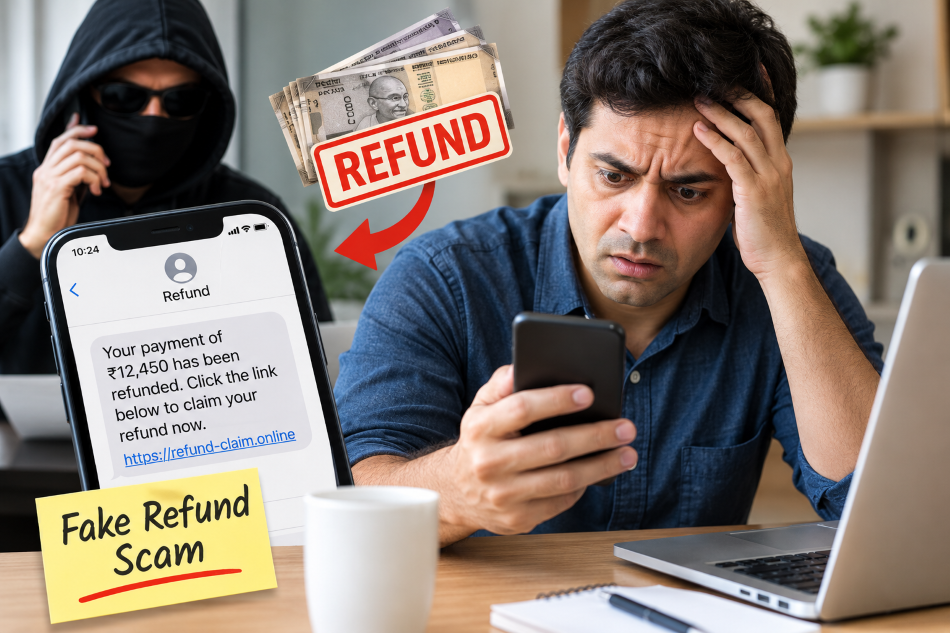
Refunds are supposed to put money back into your pocket. unfortunately, scammers have discovered that the promise of a refund can be used to do exactly the opposite. fake refund scams are becoming an increasingly common form of fraud in which criminals pretend that you are entitled to a refund, then manipulate you into sending them money, revealing sensitive information, or giving them access to your device.
the scam often works because the victim is not expecting to be suspicious. a message saying that a payment has been cancelled, an order has been refunded, or an account has been overcharged can look like good news. the fraudster then creates urgency and guides the victim through a series of steps designed to steal money or information.
understanding how these scams work is one of the best ways to avoid becoming a victim.
what is a fake refund scam?
a fake refund scam occurs when someone falsely claims that they need to process a refund for you. the criminal may impersonate a bank, online marketplace, shopping website, payment service, delivery company, software provider, or even a government organisation.
the scammer may contact you by phone, email, text message, whatsapp, social media, or a pop-up appearing on your computer. they may claim that you have been charged incorrectly, that your subscription is being cancelled, or that a transaction needs to be reversed.
instead of receiving money, however, you are eventually persuaded to make a payment or provide information that allows the scammer to take money from you.
how does the scam usually begin?
many fake refund scams begin with an unexpected message.
you might receive an email saying, “your refund is ready.” another message might claim that your account has been charged twice. a phone caller may tell you that a recent purchase qualifies for compensation.
sometimes the scammer uses information about a genuine purchase. they may know the name of a company you recently used or mention a subscription that many people have. this can make the story sound convincing.
the scammer’s objective is to get you emotionally involved before you have time to verify the claim.
the most common tricks fraudsters use
1. pretending to be a trusted company
scammers frequently impersonate well-known brands. they may use logos, professional-looking emails, fake websites, and convincing scripts.
remember that a logo or familiar company name does not prove that the person contacting you is genuine.
2. creating urgency
you may be told that the refund must be claimed immediately or that your account will be suspended if you do not act.
urgency is a powerful psychological weapon because it discourages careful thinking.
a legitimate refund generally does not require you to panic.
3. asking you to “verify” your account
the fraudster may request your password, one-time password, card details, bank information, or other security information.
never assume that a request is safe simply because the caller says it is necessary to process a refund.
4. sending a fake refund link
you may receive a link that appears to lead to a genuine company website. instead, it can lead to a fake login page designed to steal your username and password or payment information.
always be cautious with links received unexpectedly.
5. the overpayment trick
one particularly dangerous variation involves the scammer claiming that they accidentally refunded too much money.
they may show you a fake transaction or manipulate your banking screen into making it appear that money has been deposited. they then ask you to return the “extra” amount.
if you send the money, you may later discover that the original refund never existed.
6. remote-access software
some scammers claim that they need to “help” you receive your refund. they may ask you to install remote-access software or allow them to control your computer.
once inside your device, they may access personal information, banking accounts, saved passwords, or files.
a stranger asking for remote access to your device should be treated as a major warning sign.
warning signs of a fake refund scam
watch for several red flags appearing together.
• you were contacted unexpectedly about a refund you did not request.
• the person demands immediate action.
• you are asked for an otp or password.
• you are told to install remote-access software.
• you are asked to pay a processing, verification, or release fee.
• you are instructed to transfer money to receive your refund.
• you are asked to purchase gift cards or cryptocurrency.
• the refund is supposedly available only through an unusual payment method.
• the sender’s email address or website address looks suspicious.
• the caller becomes aggressive when you question the request.
• you are told not to contact your bank or anyone else.
any one of these signs deserves caution. several together strongly suggest a scam.
legitimate refunds usually work differently
a genuine refund normally goes back through the original payment method or through the company’s established refund process. you should not normally have to send money to receive money.
if a company genuinely owes you money, verify the transaction independently rather than following instructions provided by an unexpected caller or message.
open the company’s official website or app yourself. do not use the link supplied by the person contacting you.
never share an otp to receive a refund
one of the most important rules of digital safety is simple: never share a one-time password with someone who contacts you unexpectedly.
an otp may be used to approve a transaction, change account settings, or access your account.
a scammer may describe it as a “refund verification code,” but the purpose can be completely different.
treat unexpected requests for security codes as a serious warning.
what to do if someone claims you have a refund
stop and verify.
first, ask yourself whether you actually made a purchase or payment that could generate a refund.
next, check your account independently. use the official mobile app or type the company’s website address yourself.
if you believe a refund is legitimate, contact the company using a phone number or support channel obtained independently.
do not rely on the contact information supplied by the suspicious caller or message.
what if you have already sent money?
act quickly.
contact your bank, card issuer, payment service, or relevant financial institution immediately. explain that you believe you have been targeted by fraud.
if you shared passwords, change them immediately, particularly if you use the same password elsewhere.
if you installed remote-access software, disconnect the affected device from the internet and seek trusted technical assistance. remove unauthorized software only after considering whether evidence may be useful for reporting the incident.
also report the scam to the appropriate fraud-reporting authority in your country.
keep screenshots, emails, telephone numbers, transaction details, and other evidence. these details may help investigators or your financial institution.
practical habits that can protect you
you do not need to become a cybersecurity expert to protect yourself from refund scams.
make these habits automatic:
• never pay money to receive an unexpected refund.
• never share passwords, otp codes, or banking security information.
• verify unexpected refund messages independently.
• use official apps and websites rather than supplied links.
• enable two-factor authentication where available.
• keep your phone, computer, browser, and security software updated.
• review bank and card transactions regularly.
• be especially cautious when someone asks you to install remote-access software.
• discuss common scams with elderly family members and less-experienced internet users.
most importantly, give yourself permission to pause. scammers depend on speed, confusion, fear, and excitement. taking five minutes to verify a claim can prevent a major financial loss.
why smart people fall for refund scams
falling for a scam does not mean someone is foolish. fraudsters deliberately create realistic situations and exploit normal human reactions.
a person who has recently experienced a billing problem may be particularly receptive to a refund message. someone worried about losing an account may act quickly when threatened with suspension.
scammers also use professional-looking websites and convincing language.
the best defence is therefore not suspicion of everything. it is a simple verification habit: stop, check, and then act.
frequently asked questions
can a company ask me to pay a refund fee?
there can be legitimate situations involving fees in financial services, but an unexpected request to send money before receiving a supposed refund is a major warning sign. verify the claim independently before paying anything.
can a scammer fake a bank refund notification?
yes. scammers can create convincing emails, messages, screenshots, and fake websites. never treat a notification alone as proof that money has actually reached your account.
should i click a refund link in an email?
if the message is unexpected, avoid clicking the link. open the company’s official website or app independently and check your account there.
what if the caller knows my personal information?
that does not prove the caller is genuine. personal information can be obtained from data breaches, public sources, previous scams, social media, or other channels.
what is the safest response to a suspicious refund call?
end the call and verify the situation independently. do not argue with the caller or provide personal information.
conclusion
fake refund scams turn something positive—a promised payment—into a trap. fraudsters may impersonate trusted companies, create fake refund notifications, demand verification payments, steal security codes, or use remote-access software to reach your accounts.
the most important rule is easy to remember: you should not have to send money, reveal sensitive security information, or surrender control of your device simply to receive an unexpected refund.
when a refund offer arrives unexpectedly, slow down. check your account yourself, contact the organisation through an official channel, and never allow pressure to replace verification.
a few minutes of caution can protect much more than your money. in the digital wo*rld, the safest refund is one you verify before you trust it.